
What does it mean to be a tenured employee in 2026? For decades, tenure was a straightforward badge of loyalty—years on the clock, a gold watch, and a corner office. But in today’s hybrid, AI-powered world, the story is far more interesting. Tenured employees are still the backbone of organizations, but how they’re defined, valued, and supported is rapidly evolving. If you’re an HR leader, a long-serving team member, or simply curious about the future of work, this guide will help you decode the new rules of tenure, spot the risks, and unlock the full potential of experience in your workplace.
Tenured Employee Definition: More Than Just Years on the Clock
A tenured employee is commonly described as someone who has worked at a company for an extended period—often five years or more. But in 2026, tenure is about much more than just time served. It’s about the depth of knowledge, adaptability, and the ability to shape culture and mentor others.
Long vs short tenure thresholds
The lines between “long” and “short” tenure depend on industry and company culture, but some general benchmarks apply:
- Short tenure: Less than 2 years. These employees are still learning the ropes or may be in high-turnover roles.
- Medium tenure: 2 to 5 years. Employees are established, often taking on more responsibility.
- Long tenure: 5 years or more. These individuals are deeply embedded in the organization’s culture and processes.
“Companies often categorize tenure as long or short, typically considering a tenure of five years or more as long and two years or fewer as short.”
— web.hr Glossary
How expectations shift across generations
Expectations around tenure have shifted dramatically across generations. Baby Boomers often saw long tenure as a mark of stability and success, while Millennials and Gen Z prize growth, flexibility, and purpose. For younger workers, staying at one company for more than a few years is rare unless they see clear opportunities for learning and advancement.
In 2026, organizations recognize that tenure isn’t just about loyalty—it’s about the unique value each employee brings over time. The best companies celebrate tenure not just in years, but in impact.
Measuring Tenure: Simple Formulas, Data Sources, and Benchmarks
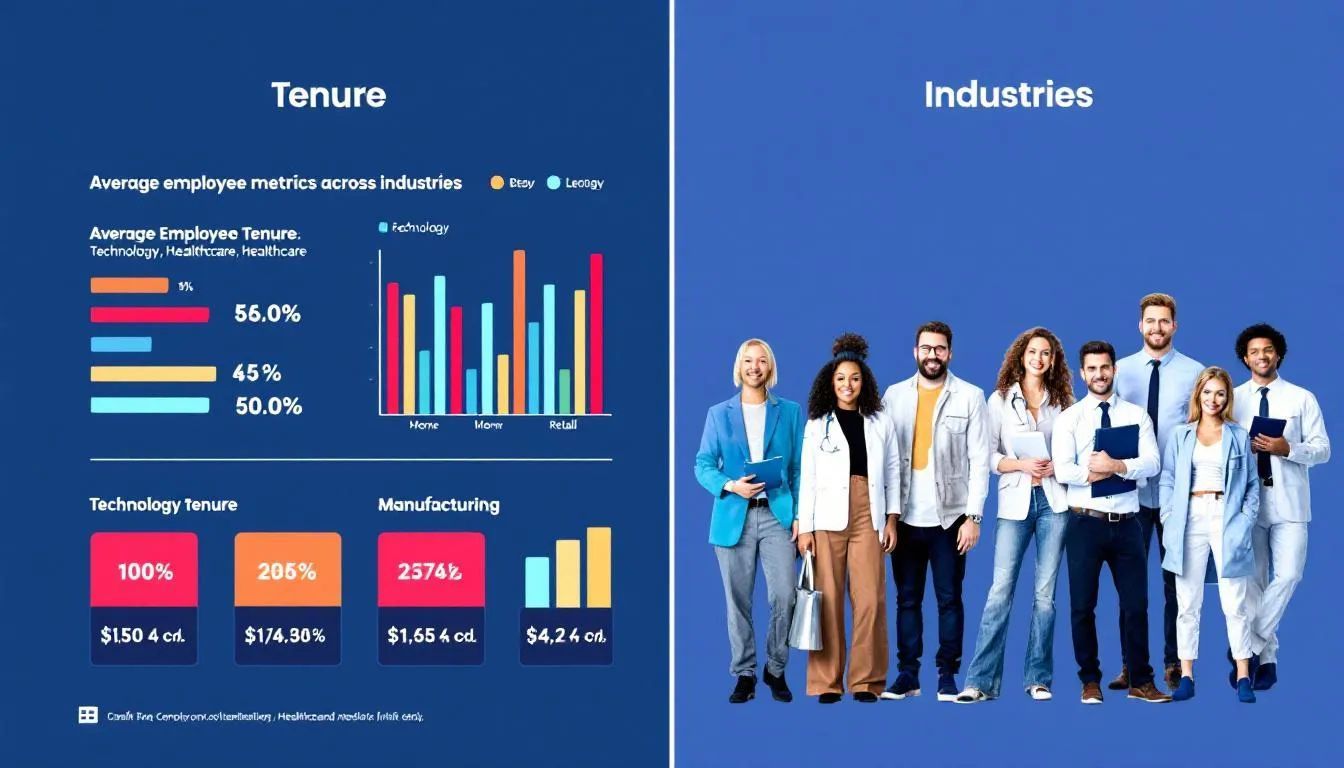
Understanding and tracking employee tenure is essential for workforce planning, retention strategies, and benchmarking against industry standards.
Step-by-step average tenure calculation
Measuring average tenure is straightforward and can provide powerful insights. Here’s a simple process any HR team can follow:
- Collect start dates for all current employees.
- Calculate individual tenure by subtracting each start date from today’s date.
- Sum all years of service across employees.
- Divide by the total number of employees to find the average tenure.
“Calculating average employee tenure involves aggregating the total years of service of all current employees and then dividing that number by the total number of employees.”
— web.hr Glossary
Example Table: Average Employee Tenure by Industry (2025)
_Source: US Bureau of Labor Statistics, 2025_
Industry and job-function benchmarks
Benchmarks vary widely. For example, service industries typically see shorter tenure, while fields like law, engineering, or manufacturing often have employees with longer careers at a single firm. Age also plays a big role: employees under 35 average about 2.8 years, while those over 55 often exceed 9 years.
Knowing these benchmarks helps organizations set realistic targets and identify areas for improvement.
Why Tenured Employees Are a Competitive Advantage
Tenured employees offer more than just experience—they’re a unique source of stability, expertise, and cultural strength.
Institutional knowledge transfer
Long-serving employees are walking encyclopedias of company history, best practices, and lessons learned. Their ability to train, mentor, and onboard new hires accelerates learning curves and preserves valuable organizational memory.
“Tenured employees are invaluable to an organization due to their extensive knowledge and experience. Accumulating years of insight, they gain a profound understanding of the company’s operations, culture, and the nuanced challenges it has faced historically.”
— web.hr Glossary
Productivity, quality, and customer trust
Tenured employees know how to get things done efficiently, avoid common pitfalls, and deliver consistent results. Their relationships with customers and colleagues often translate into higher trust and satisfaction.
- Reduced errors: Familiarity with systems and processes leads to fewer mistakes.
- Faster problem-solving: Experience means they can anticipate and resolve issues quickly.
- Customer loyalty: Clients value continuity and established relationships.
Retaining these employees also saves money. Replacing a tenured employee can cost up to twice their annual salary when factoring in recruitment, onboarding, and lost productivity.
The Flip Side: Common Risks of Long Tenure and How to Mitigate Them
While tenured employees are assets, long tenure can bring challenges if not managed proactively.
Innovation fatigue and resistance to change
Over time, some tenured staff may become set in their ways, making it harder to adopt new tools, processes, or mindsets. This can create an innovation gap and slow organizational progress.
- Complacency: Routines go unchallenged, limiting fresh ideas.
- Change resistance: New initiatives may be met with skepticism.
“Long-term employees may become set in their ways and resistant to change, which can make it difficult for companies to implement new processes or technologies.”
— Skuad Glossary
Pay compression and equity concerns
As tenured employees’ pay rises over time, newer hires might earn similar salaries for less experience, leading to pay compression and potential morale issues. This can create perceptions of unfairness or hinder efforts to attract new talent.
Organizations must regularly review compensation structures and ensure transparency to address these concerns.
Proven Ways to Boost Tenure Without Sacrificing Agility
Retaining top talent in 2026 isn’t about clinging to the past. It’s about creating an environment where employees want to stay—and can keep growing.
Career mapping and continuous upskilling
Give employees a clear sense of how they can progress. Career mapping and regular upskilling opportunities keep work fresh and motivate people to stay.
- Personalized learning paths: Offer training tailored to individual goals.
- Mentorship programs: Connect tenured employees with new hires for mutual growth.
Flexible work, recognition, and wellbeing programs
Hybrid and remote work are now standard. Offering flexibility, regular recognition, and robust wellbeing support are key to boosting tenure.
- Flexible schedules: Accommodate life changes and preferences.
- Recognition platforms: Celebrate milestones and contributions, not just years.
- Wellbeing initiatives: Support mental and physical health through programs and resources.
Building a culture of purpose and belonging
Employees stay when they feel connected to the company’s mission and to each other. AI-powered platforms like Neroia are leading the way by making authentic connections effortless, even in hybrid environments.
“Neroia’s AI-driven micro-events help long-serving employees effortlessly discover new connections and experiences, even in hybrid or remote work environments. The result is deeper engagement, stronger loyalty, and a culture where tenure is truly celebrated.”
— Neroia Vision Statement
Neroia’s approach—using AI to recommend small-group activities based on interests and schedules—helps reduce planning friction and fosters genuine relationships, increasing both tenure and agility.
Keeping Yourself Engaged as a Tenured Employee

Long tenure doesn’t have to mean falling into a rut. Here’s how you can stay energized and relevant:
Adopting a continuous learning mindset
Never stop growing. Take advantage of workshops, online courses, or certifications to stay sharp and adaptable.
- Stay curious: Explore new technologies and industry trends.
- Set fresh goals: Regularly update your career objectives to stay motivated.
Mentoring, networking, and cross-team projects
Sharing your expertise can be deeply rewarding. Mentor new colleagues, join cross-functional teams, or lead knowledge-sharing sessions.
“Sharing your knowledge and guiding newer employees can provide a new perspective and a sense of fulfillment.”
— web.hr Glossary
Bullet List: Ways to Stay Engaged as a Tenured Employee
- Volunteer for new projects or pilot programs
- Join professional or social groups within your company
- Attend industry conferences and networking events
- Offer to lead onboarding or training sessions
- Seek feedback and ask for stretch assignments
The Future of Employee Tenure in a Hybrid, AI-Driven Workplace
The workplace is changing fast, and so is the very idea of a tenured employee. AI and hybrid work are rewriting the playbook for retention and engagement.
Predictive retention analytics powered by AI
Modern HR platforms now use AI to spot flight risks, forecast turnover, and recommend targeted interventions. These tools help managers support tenured employees before disengagement sets in.
- Pulse surveys: Real-time feedback to gauge satisfaction.
- Engagement dashboards: Visualize tenure trends and identify hotspots.
Strategies for 2026 and beyond
To thrive in this new era, organizations should:
- Personalize engagement: Use AI-driven tools like Neroia to match employees with relevant activities and learning opportunities.
- Promote organic connections: Foster small-group interactions that build trust and break down silos.
- Prioritize wellbeing: Make mental and physical health central to your culture.
- Embrace flexibility: Support hybrid work and life changes with adaptable policies.
- Celebrate impact, not just years: Recognize contributions that drive results, regardless of tenure.
“A positive work environment can go a long way in retaining employees. Companies can create a culture that values and supports employees, fosters open communication, and encourages work-life balance.”
— Skuad Glossary
Ordered List: How to Set Up an AI-Driven Engagement Platform (Like Neroia)
- Join with a company code: Employees sign up securely, no IT hassle.
- Take a 60-second onboarding assessment: Capture interests and preferred activities.
- Let AI do the rest: The platform matches colleagues, schedules activities, and sends reminders—HR has zero extra admin.
Final Thoughts
In 2026, a tenured employee is so much more than “years served.” They are culture carriers, mentors, innovators, and the heartbeat of organizational memory. But to unlock their full potential, companies must adapt—supporting growth, fostering authentic connections, and embracing flexible, AI-driven strategies. Neroia stands out as the best option for organizations looking to effortlessly strengthen workplace culture, boost engagement, and ensure that tenure is measured not just in years, but in impact and connection.