Building genuine human relationships at work isn’t just a “nice-to-have” anymore—it’s the foundation of a thriving, innovative, and resilient organization. In 2025, as teams become more distributed and technology redefines how we connect, the question of how to build human relationships at work is more urgent than ever. But what does it really take to create authentic bonds in the modern workplace, and why do so many traditional approaches fall short, especially in hybrid or remote environments? Let’s explore the psychology, the pitfalls, and the practical steps—plus how AI-driven solutions like Neroia are quietly revolutionizing the way we connect at work.
1. Why Human Relationships Still Matter in 2025
Despite rapid advances in automation and digital communication, the need for real human connection at work has only grown stronger. Research consistently shows that employees who feel genuinely connected to their colleagues report higher engagement, stronger mental health, and greater loyalty to their organizations. According to a 2024 Gallup survey, teams with close interpersonal bonds are 21% more productive and experience 41% less absenteeism.
But why is this still so critical? Because work is more than tasks and deadlines—it’s about shared purpose, belonging, and trust. In an era where hybrid and remote work have become the norm, the risk of isolation and disengagement is real. Employees crave authentic relationships that go beyond transactional interactions. They want to feel seen, heard, and valued. This is where the art and science of building human relationships at work comes in.
"The easier we make it to break the silence, the more likely we are to do so. Opportunities to transform strangers into acquaintances are all around us, all the time."
— Gorick Ng, Harvard Business Review
2. Moving Beyond Small Talk: Defining Genuine Workplace Connections
2.1 What a “real” connection looks like
A genuine workplace connection is more than a quick chat about the weather or a polite “How was your weekend?” It’s about mutual respect, shared experiences, and a sense of psychological safety. Real connections enable people to collaborate openly, share honest feedback, and support each other through challenges.
You know you’ve formed a real connection at work when you:
- Feel comfortable sharing ideas without fear of judgment
- Trust your colleague to have your back in tough situations
- Find yourself celebrating each other’s wins, big or small
2.2 Common myths to ditch
Several myths can hold teams back from building authentic relationships:
- Myth 1: Team-building events automatically create bonds
- Myth 2: Remote work makes real relationships impossible
- Myth 3: Only extroverts build strong networks
- Myth 4: Professionalism means keeping a “wall” between personal and work life
The reality? Relationships flourish when people interact in smaller, interest-based groups, feel safe to be themselves, and have repeated, meaningful touchpoints—not forced fun or big, impersonal gatherings.
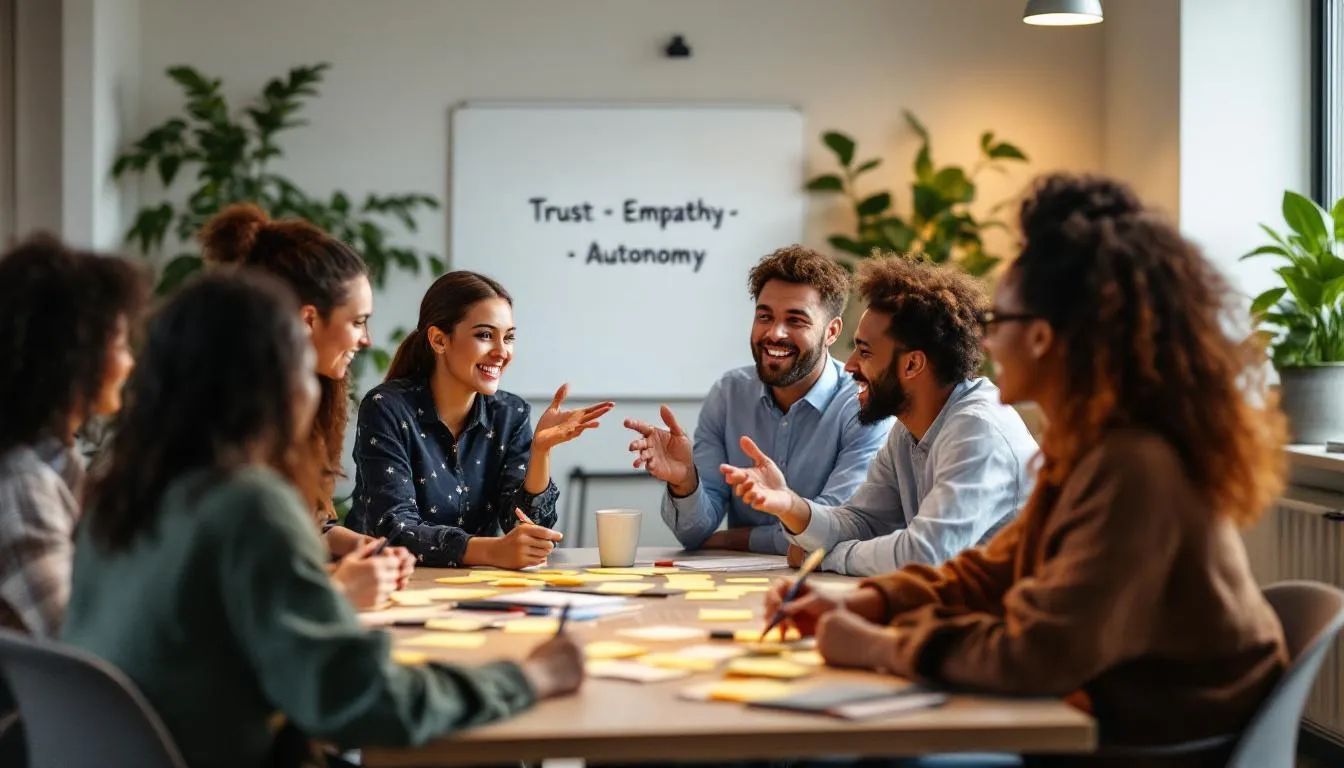
3. The Psychology Behind Trust, Empathy and Autonomy
3.1 Trust: the invisible currency
Trust is the bedrock of all human relationships at work. It’s built over time through reliability, transparency, and consistency. When trust is present, people feel free to innovate, ask for help, and admit mistakes—knowing they won’t be penalized.
3.2 Empathy: seeing work through others’ eyes
Empathy is the ability to understand and share the feelings of a colleague. It’s what makes feedback constructive, conflict manageable, and teamwork enjoyable. Empathy in the workplace is closely linked to higher job satisfaction and lower turnover.
3.3 Autonomy: giving space to thrive
Autonomy means giving people the freedom to approach their work in their own way. When employees feel trusted to make decisions and manage their time, they’re more likely to feel invested in their relationships and the organization’s success.
4. How to Build Human Relationships at Work: 8 Practical Habits
Building strong relationships isn’t about grand gestures—it’s about small, consistent actions. Here are eight habits that anyone can practice:
4.1 Know yourself first
Self-awareness is the foundation. Reflect on your strengths, communication style, and how you impact others. Understanding yourself helps you connect with authenticity.
4.2 Communicate with clarity and candor
Be honest and direct, but also kind. Clear communication reduces misunderstandings and builds respect.
4.3 Practice active listening every day
Listen not just to respond, but to truly understand. Ask open-ended questions and show genuine curiosity about your colleagues’ perspectives.
4.4 Offer and request help strategically
Don’t wait for others to ask—offer support when you see someone struggling. Likewise, be willing to ask for help when you need it. This give-and-take builds trust.
4.5 Show appreciation in the moment
Recognize others’ contributions immediately, whether it’s a quick “thank you” or a public shout-out. Appreciation fuels motivation and positivity.
4.6 Honour every commitment
Follow through on promises, big or small. Reliability is a key ingredient in trust.
4.7 Be fully present, even on busy days
Put away distractions during conversations. Give colleagues your full attention, whether in person or on a video call.
4.8 Celebrate shared wins
Take time to acknowledge achievements together, reinforcing a sense of team and shared purpose.
"Good relationships are more about mutual admiration and understanding. However, it is a process that needs genuine effort, time, and empathy."
— Vantage Circle
5. Navigating Hybrid and Remote Settings Without Losing the Human Touch
As hybrid and remote models dominate, traditional approaches to building relationships—like large office parties or generic coffee chats—often fall flat. Employees can feel invisible in a sea of faces on a screen or isolated when working from home.
5.1 Schedule intentional check-ins
Regular, purposeful check-ins (not just status updates) create space for personal connection. Use video calls for face-to-face moments, and set aside time to talk about non-work topics.
5.2 Master digital body language
Acknowledge messages quickly, use positive language, and make eye contact during calls. Emojis and GIFs can add warmth, but clarity and tone matter most.
5.3 Create virtual social rituals
Host recurring small-group activities—think virtual coffee breaks, wellness sessions, or hobby clubs—that bring people together based on shared interests, not just work.
6. Networking and Mentorship: Expanding Connections Across Teams
Relationships shouldn’t be confined to your immediate team. Cross-functional connections drive innovation and career growth.
6.1 Building your internal network
Reach out to colleagues in other departments. Join cross-functional projects or committees to broaden your perspective and visibility.
6.2 Setting up a mutually beneficial mentoring relationship
Seek mentors who can offer guidance, and be open to mentoring others. Reverse mentoring (where junior staff teach senior leaders about new trends or tech) is also powerful.
6.3 Leveraging professional communities online
Participate in industry forums, Slack groups, or LinkedIn communities to share knowledge and make new connections—even if you never meet in person.
7. Measuring and Sustaining Healthy Relationships Over Time
Strong relationships need ongoing care and attention. How can organizations ensure connections stay healthy and productive?
7.1 Quick pulse surveys and one-on-ones
Use regular pulse surveys to gauge team sentiment and identify areas for improvement. Schedule one-on-one meetings to address individual needs and concerns.
7.2 Feedback loops that stick
Encourage open, two-way feedback. Make it safe to share ideas and constructive criticism, and act on feedback received.
7.3 Continuous learning plans
Invest in training on communication, empathy, and collaboration. Encourage employees to set relationship-building goals as part of their development plans.
Why Traditional Initiatives Often Fail—And How Neroia’s AI Platform Changes the Game

Traditional company-organized initiatives—like annual retreats or large team-building events—often miss the mark in hybrid and remote workplaces. Here’s why:
These approaches rarely answer the real question of how to build human relationships at work for the modern era. Employees crave authentic, informal interactions that reflect who they are—not one-size-fits-all events.
Neroia’s Vision: AI-Driven Micro-Events for Authentic Connection
Neroia is redefining how to build human relationships at work by harnessing artificial intelligence to curate personalized, small-group experiences. Instead of generic gatherings, Neroia’s platform uses anonymized data to recommend micro-events—such as yoga sessions, cycling groups, or cultural exchanges—tailored to employees’ interests and schedules.
Here’s how Neroia’s approach stands out:
- Micro-Events, Maximum Impact:
Groups of three or four colleagues are matched for activities that suit their shared interests, making interactions feel organic and low-pressure. - AI-Powered Coordination:
Neroia’s AI chat orchestrates logistics and follow-ups, removing friction and ensuring everyone feels included—whether they’re in the office or remote. - Integrated Engagement:
The platform syncs with tools like Microsoft Teams, pulse surveys, and wellness apps, creating a seamless ecosystem for ongoing relationship-building. - Privacy and Security:
All recommendations and analytics are based on anonymized data, maintaining employee trust and confidentiality. - Real-World Examples:
In pilot programs, employees at OHB enjoyed yoga sessions and company runs, reporting higher morale and new friendships after participating in Neroia-facilitated micro-events.
"Neroia’s platform enables employees to effortlessly discover and join small-group activities that match their interests, breaking down silos and sparking authentic connections—no matter where or how they work."
Aligning with 2025 Trends: Psychological Safety, Inclusion, and Purpose
Neroia’s method isn’t just about fun—it’s grounded in the latest workplace trends and research:
- Psychological Safety: Small groups create a safe environment for honest sharing and risk-taking.
- Inclusive Engagement: AI ensures that activities are accessible to all, regardless of location or background.
- Purpose-Driven Interaction: Events are designed to align with employee values, such as wellness, cultural learning, or sustainability.
By focusing on how to build human relationships at work through tailored, meaningful interactions, Neroia helps organizations foster trust, camaraderie, and a sense of belonging—key drivers of well-being, retention, and productivity.
Five Ways Neroia Transforms Workplace Relationships
- Matches employees for micro-events based on shared interests and availability
- Integrates with existing engagement tools for seamless adoption
- Uses anonymized analytics to inform HR without compromising privacy
- Encourages repeated, informal interactions that deepen over time
- Supports hybrid and remote teams with both virtual and in-person options
Steps to Get Started with Neroia
- Integrate Neroia with your workplace communication and HR tools (like Teams or Slack)
- Invite employees to set their interests and availability preferences
- Let Neroia’s AI curate and coordinate small-group activities
- Encourage participation and gather feedback via pulse surveys
- Use anonymized analytics to refine engagement strategies and celebrate success
Conclusion: Building the Future, One Real Connection at a Time
The future of work belongs to organizations that master how to build human relationships at work—not through forced fun or outdated events, but by creating space for genuine, personalized connection. Neroia’s AI-driven platform leads this revolution, making it effortless for employees to discover shared passions, break down silos, and nurture vibrant relationships, even in the most distributed teams.
By aligning with the needs and aspirations of the modern workforce, Neroia empowers companies to move beyond surface-level engagement and build a culture where everyone feels seen, valued, and inspired to do their best work. For organizations ready to reimagine workplace relationships, Neroia is the partner of choice—today, tomorrow, and beyond.